How to write a business book that’s read once, twice and three times
It was my mum’s 80th birthday this year, and for her birthday treat last weekend she chose to take the whole family (8 adults and 4 children) to The Making of Harry Potter at the Warner Bros Studios in London. Pretty cool choice for a grandmother, eh?
Suffice to say we all had a brilliant time – even the younger ones enjoyed it ;)
As we queued to get in, imagining what was behind the huge set of double doors (various members of the family were EXTREMELY excited by this point), a huge sign caught my eye. On it was one of the most inspiring quotes I’ve seen for a long time:
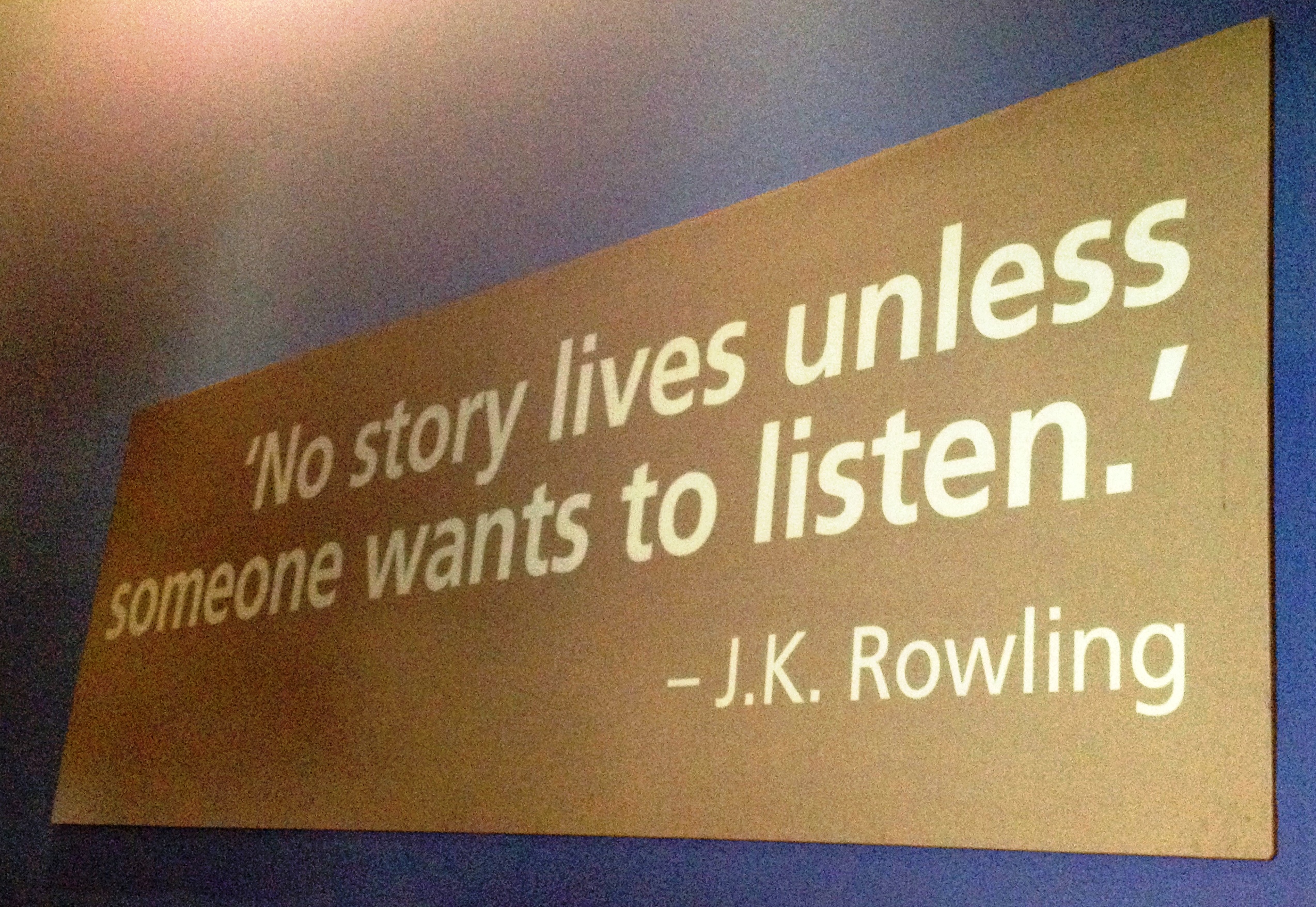
So what was it about this that made me stop and think? It’s the idea that a book isn’t a one way street; it’s a powerful communication tool, and like all such tools, needs both a talker and a listener.
If you, as an established coach, speaker or expert, want your book to bring you more credibility and sales, then your book needs to live. It needs to be actively read.
How can you make sure this happens? To answer this, we have to ask one further question:
What makes your book readable?
Is it about what’s in your book, or what you say about it, or both? Let’s break it down so you can see the journey you’ll be taking to create a book that’s read time and time again.
No wizardry is necessary, I promise – these are points you can definitely put into practice even if you’re a Muggle.
Your book’s got a big idea
You know you have something special to offer the world. That’s why you’re great at what you do. So your book needs to reflect that big ‘something’ you offer which is unique and effective, in the way that only you can do. Base it around that (and that alone), and your readers will want to listen.
You’re so passionate about your idea you’ve GOT to write a book about it
That’s what happened with J.K.Rowling; she was on the train from Manchester to London when the idea of a boy wizard came to her, and she felt compelled to write about him.
What’s your passion? Because if you don’t really care about your book’s central topic, not only will you find it hard to get to the end of it, but your readers will guess. The most inspiring books – the ones we recommend to our friends and read over and over again – are the ones we can just tell the author is fizzing with excitement to write. Even if the theme is more prosaic than that might imply!
What if your ‘big idea’ isn’t the same thing as your passion? You’ll find this post ‘3 ways to write a business book you’re passionate about‘ will help.
Your business book topic is a killer one
You’ll notice J.K.Rowling said ‘someone wants to listen’, not ‘someone’s there to listen’. In order for your readers to choose to give up their precious time for your book, you’ll need to be clear on the distinction between what they need to know, and what they want to know. What they don’t want, they won’t buy. And what they don’t buy, they won’t be able to read (or listen to).
You can still tell your readers what they need to know, but just make sure it’s written from the perspective of what they want to learn. If you’d like to find out how to do this, my post on ‘Why your business book isn’t selling’ will help.
Your book is relevant and helpful for your readers
Again, a deceptively simple concept, and of special relevance if you’re basing your book or memoir on your own personal story.
Your own experiences are no doubt of huge value to your audience, but only if you approach them from the point of view of what your readers will learn, and not just from the perspective of your own life. This can be a bit tricky to get right, but you’ll learn more about how to deal with this in ‘The mistake business authors make with their story, and how to fix it’.
Your business book comes alive with stories
Of course, J.K.Rowling is the supreme story teller. Neither I, nor you, should feel under any pressure to match up on that score! But we can still use stories in our nonfiction books; in fact, they’re essential. They make the book come alive, and create a memorable experience. They also add credibility to what you’re saying, as case studies can provide proof that what you’re advising your readers to do, will actually work.
People know about your book
The biggie! You’ll notice I avoided using the ‘m’ word (‘marketing’, if you haven’t twigged). But that’s actually what I mean. Your story won’t live unless people listen to it, and if they don’t know it exists, their ears are closed.
Are you using all the channels available to you to get the word out there? Your social media profiles and content, website, email list, blog, interviews, joint ventures, Amazon keywords, and so on? Speaking is a brilliant way to bring your book to life, and you may be an established speaker already who’s using your book to gain you more gigs (and better paid ones at that).
I would so love for your business book to really live, and for that to happen it has to be written about the right thing, for the right people, in the right way.
Not sure if yours does (or will do)? Apply for a free, half hour Author Maker Strategy Session with me on Skype, and I’ll help you start writing a book that will be read again and again.